What is a mini app? A plain-English guide for brands
A mini app is a small, focused app that opens instantly from a link. There is nothing to download, no app store page and no account wall before you can start. You tap, it loads, you're using it.
That's the short version. The longer version matters if you're a brand deciding where to spend your next campaign budget, so let's go through it properly.
Mini apps in one sentence
A mini app does one job really well, runs in the browser or inside another app, and is designed to be shared. Think of a daily quiz, a prediction game, a loyalty stamp card, a matchday companion or a members' hub. Each of those could be a full native app. Most of them shouldn't be.
Where the idea came from
The term took off in Asia. Tencent launched WeChat Mini Programs in 2017: small apps that open inside WeChat without being installed. They became the default way for many businesses to take orders, run promotions and offer services, because their customers were already inside the chat app all day.
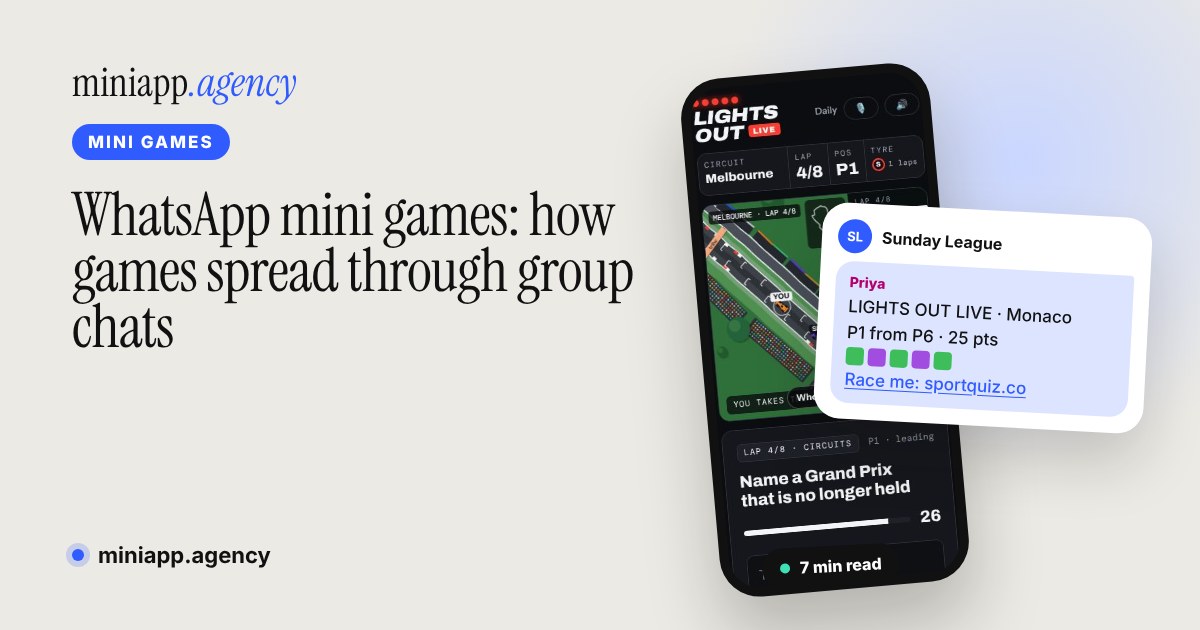
Telegram followed with Mini Apps that run inside its chats. In the UK and Europe, where WhatsApp is the group chat of choice, there isn't an equivalent mini app store inside the messenger. But the behaviour is the same: people live in their chats, and they tap links friends send them. A web-based mini app shared as a link gets you most of the benefit, on every phone, without needing anyone's permission.
What makes something a mini app (and not just a website)
- It's an experience, not a brochure. You do something: play, predict, collect, vote, compete.
- It opens from a link in under a few seconds. No install, no store, no sign-up before the fun starts.
- It has a reason to come back. A daily round, a streak, a league table, a new chapter.
- It's built to be shared. The result is something people want to post, and every post carries a link back in.
- It can feel like an app. Modern browsers let people add it to their home screen, get push reminders and use it full screen.
Why brands are building mini apps instead of native apps
Native apps are brilliant when people use them every day for years: banking, maps, messaging. For almost everything else, the download is the problem. Every step between "that looks fun" and "I'm playing" loses people: the store page, the download, the account, the permissions. A link skips all of it.
There are other reasons too:
- Speed. A focused mini app can go from idea to a playable prototype in days, not months.
- Reach. The same link works on iPhone, Android and desktop, in WhatsApp, Instagram, email, QR codes and newsletters.
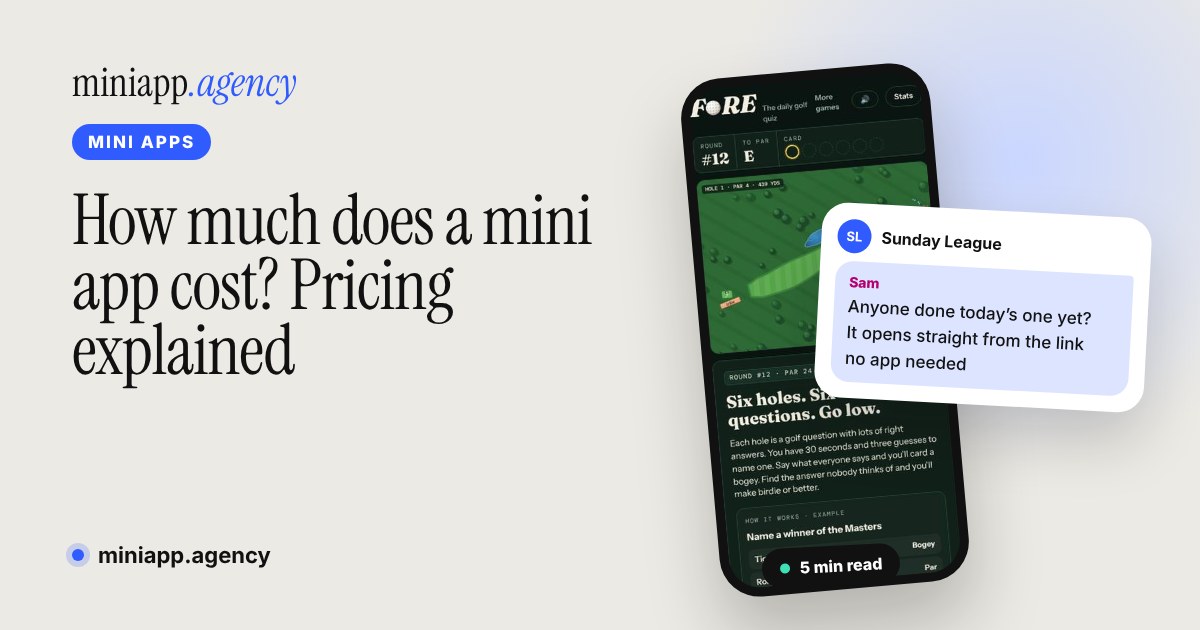
- Cost. One build instead of two native apps plus store submissions. See how much a mini app costs.
- Measurability. Every play, share and return visit can be counted, so you know what worked.
Examples of mini apps
The ones that spread fastest are usually games. Our own SportQuiz is a collection of 13 sports mini games: daily quizzes like Top Bins, live races for up to ten friends in Lights Out Live and season-long leagues in Derby Day. None of them need a download. You can play them in our arcade.
Other formats that work well as mini apps:
- A daily trivia game about your product or your sport
- A prediction league for a tournament or a TV series
- A digital stamp card or scratch card with real rewards
- A members' app for a club, community or event
- A personality quiz or "which one are you?" that ends with a recommendation
When a mini app is the wrong choice
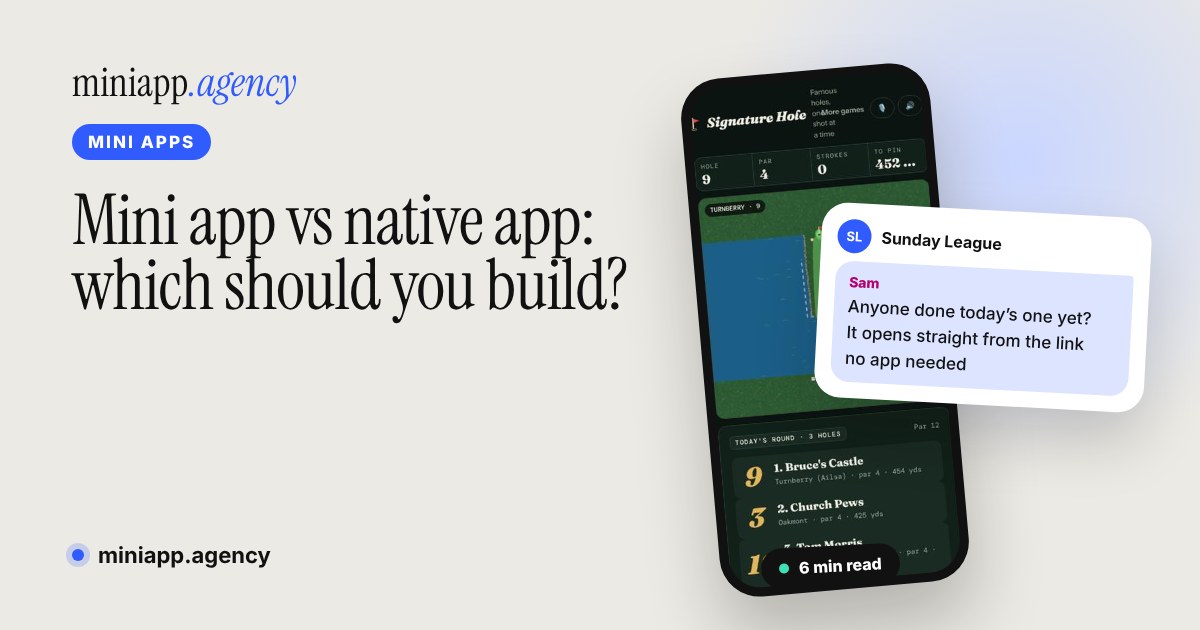
If you need deep access to the phone (Bluetooth, background location, heavy offline use) or you're building something people will open many times a day for years, a native app may be worth it. Many brands start with a mini app to prove demand, then wrap the same thing for the App Store later. We cover the trade-offs in mini app vs native app.
The takeaway
A mini app is the fastest way to put something people can actually use and share in front of your audience. It meets them where they already are, in the group chat, and asks nothing of them except a tap.